Sign up to the GMCR Update newsletter
Do you want to keep up to date with the latest GMCR news and updates?
Subscribe to our mailing list Read previous GMCR Update newsletters

End-of-life integrated care planning on the GM Care Record
The GMCR Electronic Palliative Care Coordination System is the only integrated care plan that allows everyone involved in an individual’s end-of-life care to understand and work towards achieving their end-of-life care preferences – ensuring seamless, compassionate, and coordinated care.
Why is EPaCCS on the GM Care Record?
The aim of GMCR EPaCCS is to improve end-of-life care in Greater Manchester. We have an opportunity with the GMCR to share patients’ information with their consent with other professionals. A shared EPaCCS care plan means different health and care professionals can access vital palliative care information at any time.
Quick link to Resources Quick link to SupportIntroduction to GMCR EPaCCS
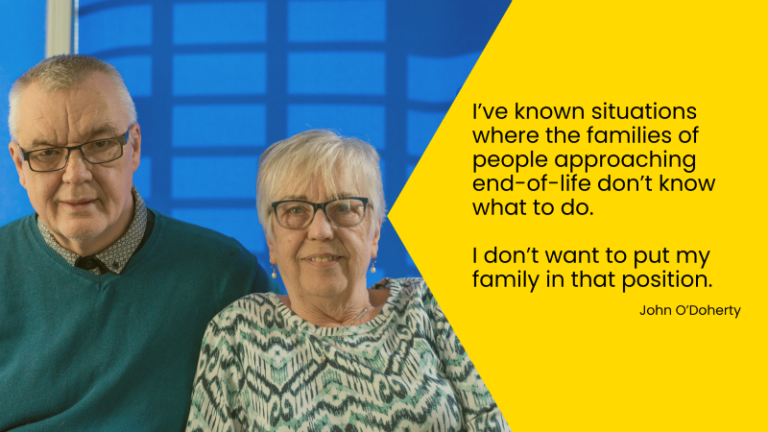
Patient and carer perspective
What are the benefits for individuals and health and care professionals?
Information sharing is critical for patients, specifically when they reach the end of life to guide clinical decision making and respect individuals’ care preferences.
People tell us they don’t want to tell the same story to different professionals time and again.
With GMCR EPaCCS, different professionals can start, view, add to and update the shared record with end-of-life preferences and wishes in a safe and secure space.
When other professionals contribute to a GMCR EPaCCS, they save time by helping guide the timeliest clinical decision making with the most up-to-date information.
Importantly, it helps the health and care community support each person in their preferred place of care.
Benefits for individuals approaching end of life
How do I get started using GMCR EPaCCS?
It starts with a conversation based on something the individual, carer or family member says. Or if you have some new clinical information that identifies someone with palliative or end-of-life care needs.
Open the discussion around their end-of-life care preferences. And then ask, is it OK to share this information?
Using the GMCR EPaCCS to share this information ensures the health care team supporting each individual is aware of what they need to provide good end-of-life care.
GPs may start an EPaCCS form, but other professionals such as consultants, district nurses, out of hours and palliative care staff involved in someone’s care can also start, contribute and view a record. There’s a lot to go through so it doesn’t have to be completed all at once.
Start the conversation. Share the conversation.
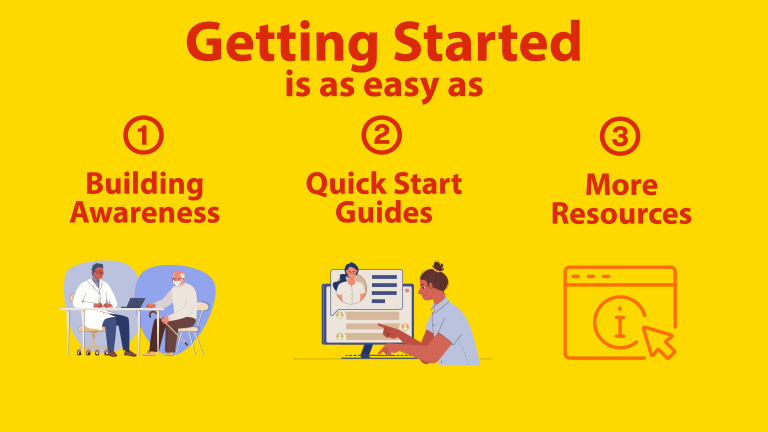
With posters, quick start guides, video walk-throughs and a whole lot more, click on the image below to access all the resources you need to get started with GMCR EPaCCS.
If you have any questions, suggestions or comments about the GMCR EPaCCS Toolkit, please email communications@healthinnovationmanchester.com.

If you’d like to help raise awareness and promote the benefits of GMCR EPaCCS as well as gather meaningful feedback for continuous improvement, become a GMCR EPaCCS Champion! Click the link below to apply
Apply to become a GMCR ChampionDo you want to keep up to date with the latest GMCR news and updates?
Subscribe to our mailing list Read previous GMCR Update newslettersFrequently Asked Questions – General
The GM Care Record provides health and social care professionals with vital information to inform safer decision-making about care and treatment for all 3 million of us in Greater Manchester. It shares important information about health and care including current health or care issues, medications, allergies, test results, care plans, social care and input from patients or via the MyGMCare app.
The GM Care Record pulls patient information from several important areas of health and care including primary care, secondary care, community services, mental health services, social care and specialist services e.g. The Christie.
This means that people won’t have to repeat their medical history to professionals in different organisations, care plans will be followed consistently, and clinicians will be better equipped to identify patterns and plan care more effectively to meet individuals’ needs.
EPaCCS stands for Electronic Palliative Care Coordination System. EPaCCS is used to record and share an individual’s beliefs, values, preferences and other key details about their care, with their consent, as they are approaching or within the last year of their lives.
An EPaCCS includes key information such as informal carer/family information, lasting power of attorney details, diagnosis and prognosis information, special requirements, preferred place of care, preferred place of death, advance care planning information, anticipatory medication information, cardio-pulmonary resuscitation information, life-sustaining treatment information, and bereavement concerns.
The system helps coordinate and deliver the right care, in the right place, by the right professional, at the right time.
GMCR EPaCCS is located within the GMCR which is accessible to health and social care professionals including Primary Care, Secondary Care, Hospices, Mental Health, The Christie, Out of Hours services and and 111.
Currently NWAS do not have access, but work is underway to resolve this. However, they are still able to access pertinent information via 111 or the GP record via GP Connect. Care Homes do not currently have direct access to the GMCR.
By embedding EPaCCS on the GMCR everyone involved in end of life care has access to comprehensive and up-to-date information and care preferences. This sharing of key information across multiple professionals and providers, supports clinical decision-making, care coordination, and ensures everyone is on the same page regarding each person’s care and their preferences.
The GM Care Record is accessible through your Electronic Patient Record (EPR) system using Single Sign On (no extra login required).
If you don’t use an EPR, you can access the GMCR via the Graphnet web portal.
The key benefits of using GMCR EPaCCS include, enhanced person-centred clinical decision-making, improved care experience, shared responsibility among healthcare professionals, and a reduction in unnecessary hospital admissions and ambulance conveyance.
GMCR EPaCCS is available in most Greater Manchester localities. We are working towards full accessibility across the region.
Once an individual has been identified as likely to be in their last year of life, discussions should be initiated to understand their wishes and preferences. A GMCR EPaCCS should then be created, with their consent, to share this key information with other professionals. This can be done by clinicians from any setting that has GMCR access and is trained to complete an EPaCCS.
The clinician who identifies an individual as being in their last year of life should create a GMCR EPaCCS (providing they are trained to do so) – this could be a GP, hospital doctors or nurse, community nurse or hospice clinician. The EPaCCS does not need to be completed in its entirety (only mandatory fields need to be completed to create it) and it can be added to or edited as information becomes available or changes.
Any clinician (including GPs, Consultants, Community nurses, Hospice clinicians or Palliative Care specialists) trained on creating an EPaCCS, with GMCR access, can create or edit one. This process is usually recommended for those identified as likely to be in the last year or so of life with palliative care needs (e.g. those within primary care palliative/ GSF practice registers) with their consent.
However, if you have a trained administrative member of staff who has been designated as a responsible person to input information gained by a healthcare professional during a clinical consultation, they may copy this information from their EPR onto a GMCR EPaCCS.
A GMCR EPaCCS can be viewed by anyone with GMCR access but can only be created or edited by trained clinicians.
Yes, consent from the individual or their representative is required to create an EPaCCS. This ensures that their information is shared with their approval. Consent can be gained verbally during a consultation.
No, all fields do not need to be completed to be able to create a GMCR EPaCCS. However some fields are mandatory and these are marked with a red asterix *. A GMCR EPaCCS is a live document and can be updated at any time.
Yes, if known this information should be noted that DNACPR is in place.
The GMCR EPaCCS should be finalised within the setting that the patient died in, by a member of staff who has been trained to complete EPaCCS. Watch: How to finalise an EPaCCS form
Once the person has been referred to the medical examiner / coroner and/or a death certificate has been completed, the user will need complete the ‘After death’ section. Once done, the EPaCCS can be completed and archived by way of the ‘Finalise’ button on the End-of-Life tile. This should be done by the person/team completing the death administration paperwork.
If the ‘Finalise’ button is pressed unintentionally prior to a person’s death, then this can be undone by pressing ‘Unfinalise’.
Yes, the finalised form will still be available to view in the patient record.
No, individuals would not have access to the GMCR so cannot view or edit an EPaCCS. However, they can download the MyGMCare app and add information to the ‘All About Me’ section which includes arrangements for care in an emergency, and factors important to them and their care.
For technical issues please contact your local IT Helpdesk. For training support contact nhsgm.gmcrproductteam@nhs.net
The GMCR integrates with all existing healthcare systems providing a centralised platform for patient information. This is where a GMCR EPaCCS is accessed.
No, however any advance care planning coded data will display from the GP source system in GMCR EPaCCS when it is created, and if the information is available.
Any advance care planning coded data is pulled into GMCR EPaCCS.
If you get this message when you search for a patient on the GMCR, we recommend adding the following codes to their record, and waiting 48 hours for the feed to update. You’ll then be able to view them on the GMCR.
417528008 – Consent given for upload to local shared electronic record.
93C0 – Consent given for upload to local shared electronic record
Information can be managed via the EPaCCS Dashboard – you can select individuals via the GSF stage to discuss at GSF/MDT meetings.
Access to the operational and patient-identifiable dashboard is via the GMCR BI Team. You can request access to the EPaCCS PID dashboard by emailing your local IT Helpdesk.
Some general workflows have been created to show how EPaCCS fits with your existing workflows.
Click the link below to find out how we can support you with implementation, embedding or scaling of GMCR EPaCCS.